

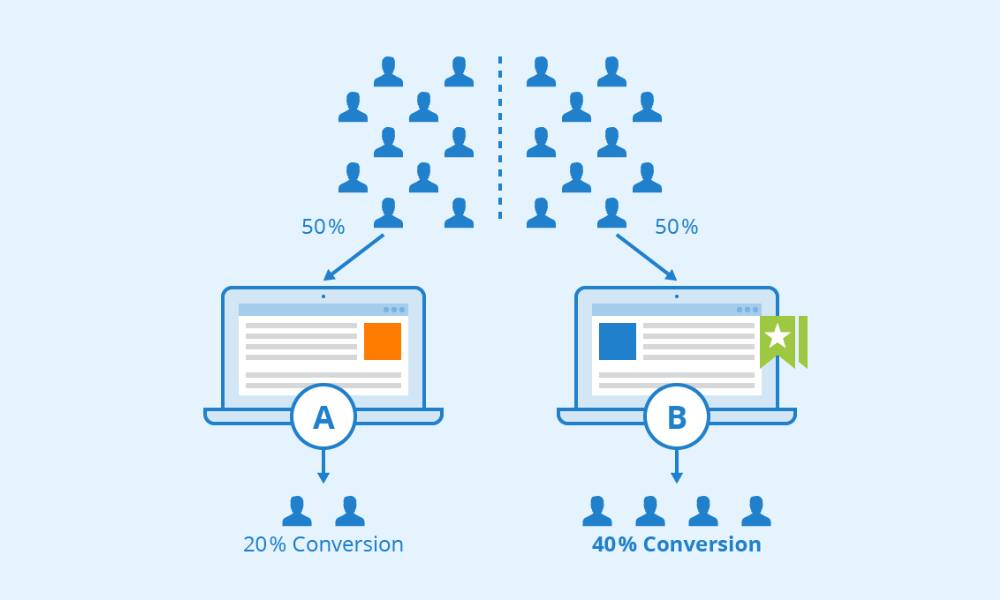
When an ad campaign isn’t working, it’s tempting to scrap everything and start over. But most of the time, you don’t need a full overhaul—you just need better data.
That’s where A/B testing comes in.
I’ve run tests that doubled ROI simply by tweaking a headline. I’ve also run tests that proved what wasn’t working—saving thousands before pouring more into the wrong idea.
If you’re guessing what works, you’re wasting money. A/B testing removes the guesswork and shows you what actually converts.
Let me show you how I do it.
What You’ll Learn:
- What to test in your Facebook and Instagram ads
- How to properly structure A/B tests (and avoid false results)
- The most impactful test variables
- How long to run a test
- What Meta’s built-in A/B testing tool gets right (and wrong)
- My exact framework for iterative testing
- Common testing mistakes and how to avoid them
Let’s get into it.
1. Why A/B Testing Is Non-Negotiable
There’s no single “perfect ad.” Even great creative eventually fatigues. That’s why I test constantly—new offers, angles, formats, visuals, CTAs.
A/B testing helps you:
- Identify the best-performing variation
- Eliminate wasted ad spend
- Scale campaigns confidently
- Learn what your audience actually responds to
It’s not about running endless experiments. It’s about making smarter decisions faster.
2. What You Can (and Should) Test
The mistake most people make? Testing everything at once.
Here’s what I test—one variable at a time:
- Headline vs. headline
- Primary text (short vs. long, emotional vs. logical)
- Creative format (image vs. video vs. carousel)
- Call to action (“Shop Now” vs. “Get Yours”)
- Audience (lookalike vs. interest vs. broad)
- Offer (free shipping vs. 10% off)
- Landing page (homepage vs. product page)
Start with high-impact variables—creative and copy—and move into deeper testing once performance is steady.
Need help writing scroll-stopping copy? Try this post on Facebook & Instagram ad creatives.
3. Structure the Test for Clear Results
If you want a real answer, keep your test clean. That means:
- One variable at a time: Don’t test two different creatives AND different audiences in one test. You won’t know what worked.
- Equal budget split: Each variation should get the same budget and schedule.
- Same objective: Don’t compare a Traffic campaign to a Conversions campaign.
- Isolate audiences: If two ads are hitting the same audience, you’re not really testing. You’re overlapping.
And yes—make sure your pixel is working. Tracking matters.
Not sure how to set up your account structure? This guide will help: How to Set Up Facebook & Instagram Ads
4. How Long Should You Run a Test?

Here’s my general rule:
- Minimum 3 days (7 is better)
- At least 500–1,000 impressions per variation
- Enough budget to reach 1 conversion per variation, ideally more
Stop too early, and your results will lie to you. Let it run too long, and you could miss better opportunities.
Monitor key metrics like:
- Click-through rate (CTR)
- Cost per result (CPR)
- Return on ad spend (ROAS)
- Engagement rate
Let the data lead—not your gut.
5. Use Meta’s Built-In A/B Testing Tool (With Caution)
Meta’s built-in A/B testing tool can be useful—but it’s not perfect.
Pros:
- Easy to use
- True split test: no audience overlap
- Statistically reliable if run properly
Cons:
- Can be expensive (each test needs its own campaign)
- Limited in flexibility (you can’t always test what you want)
- Doesn’t guarantee real-world performance after the test ends
I use it for big-budget tests. But for most smaller clients, I run A/B tests manually using ad set duplication and careful structure.
6. My Go-To A/B Testing Framework
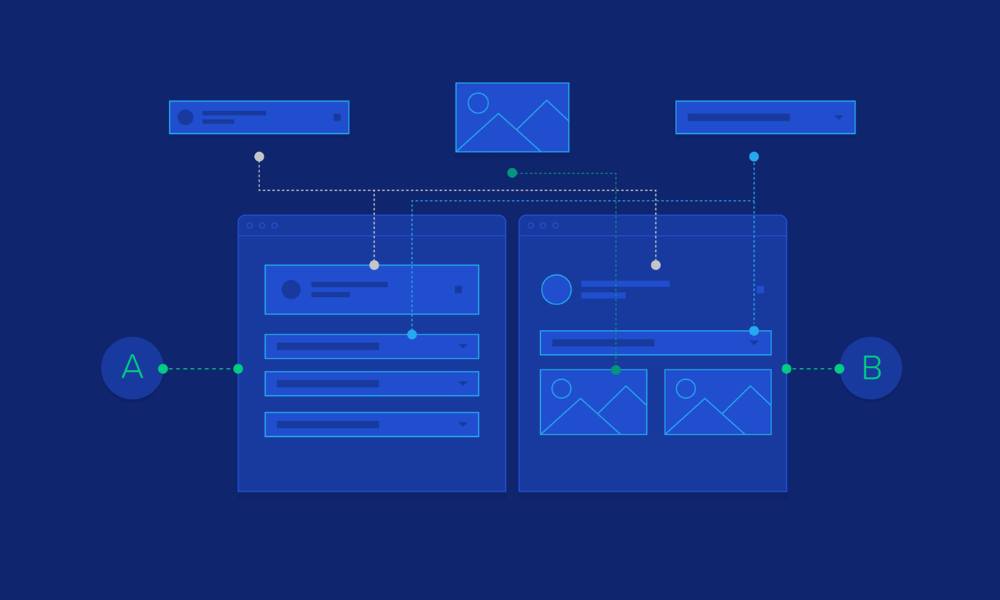
Here’s a testing process I use on repeat:
Step 1: Baseline
- Launch control ad (your current best performer)
Step 2: Isolate
- Create a duplicate ad, change ONE thing (e.g., headline only)
Step 3: Monitor
- Let both run under the same conditions
- Watch for statistical significance—not gut feel
Step 4: Replace
- If challenger wins, make it the new control
- Repeat the process with a new test variation
This keeps your creative fresh without blowing up your entire campaign.
7. What NOT to Do (Common Mistakes)
Quick list of A/B testing mistakes I see all the time:
- Testing too many variables at once
- Declaring a “winner” after just a few hours
- Comparing performance across different audiences
- Not tracking the right metrics (e.g. focusing only on likes)
- Testing on a low-spend campaign with tiny reach
Also: if something’s working, don’t test just for the sake of testing. Use tests to improve performance—not confuse yourself.
Want a deeper dive on fixing campaign issues? Read this: How to Optimize Your Social Ad Campaigns
8. What Happens After the Test?
Once a variation wins, it becomes your new baseline.
From there:
- Test again: New hook, new image, new CTA
- Use what you’ve learned across other audiences or products
- Add successful elements to retargeting or top-of-funnel
- Retire poor performers so they don’t waste spend
The goal isn’t to keep testing forever—it’s to build a performance system that scales.
Looking to scale with structure? Check this out: How to Run High-Performing Ad Campaigns
Final Thoughts
A/B testing isn’t optional. If you want better ROI, it’s how you find it.
It gives you clarity. It saves budget. It shows you what your audience actually cares about—so you can stop guessing and start converting.
Here’s what I recommend:
- Test one thing at a time
- Keep the structure clean and fair
- Let data—not emotion—determine the winner
- Turn your best ad into the new control
- Repeat what works, and keep learning
If you need help structuring your test, send it over. I’ll help you set it up right.