

Let’s be honest: KPIs are one of those terms everyone uses, but not everyone defines the same way. Some people think KPIs are just “important metrics.” Others treat them like a wish list that lives in a quarterly report and never gets touched again.
But when used right, KPIs are more than numbers—they’re strategic signals. They help you track progress, make smarter decisions, and stay aligned across teams. And no, you don’t need a 12-tab spreadsheet to do it.
In this guide, I’ll break down how I define KPIs, how I help brands choose the right ones, and how to track them in a way that actually influences outcomes.
What You’ll Learn in This Guide
- What KPIs are—and what they’re not
- The difference between metrics and KPIs (they’re not interchangeable)
- How I define and structure KPIs for client campaigns
- Tips for choosing the right KPIs based on goals and funnel stage
- Tracking methods and tools that keep things simple and scalable
- Common pitfalls to avoid when setting or reporting KPIs
What Is a KPI, Really?

KPI stands for Key Performance Indicator. And yes, the key part matters.
A KPI is:
- A measurable value
- Tied to a specific business objective
- Used to evaluate performance over time
If it doesn’t connect directly to a goal—or help influence a decision—it’s not a KPI. It’s just data.
Here’s an easy filter I use:
“If this number changes, would I change what I’m doing?”
If the answer’s no, that number probably doesn’t belong on your KPI list.
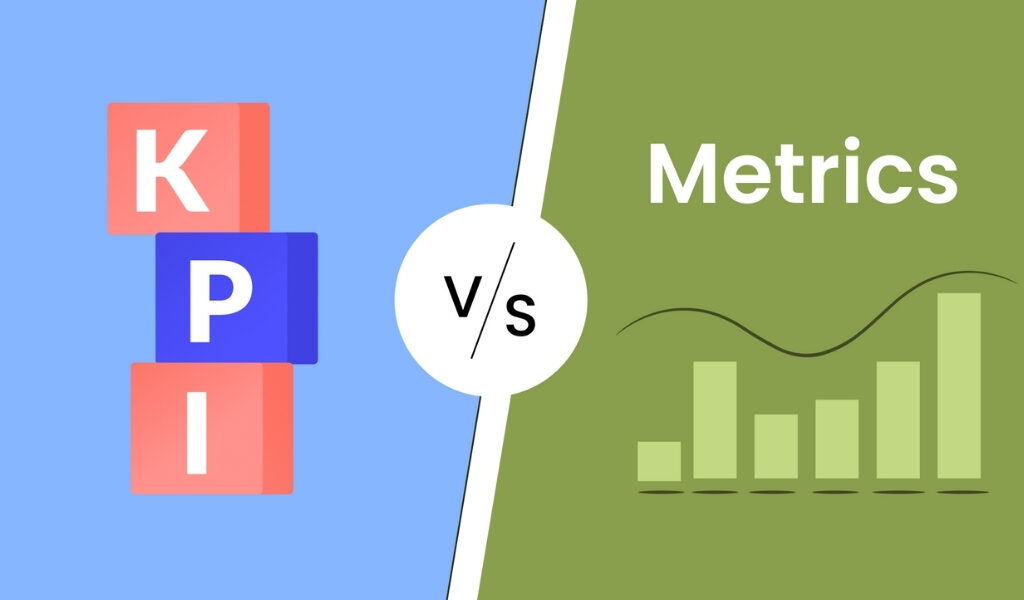
KPIs vs Metrics: No, They’re Not the Same
Quick analogy:
All KPIs are metrics, but not all metrics are KPIs.
A metric is any data point—like website sessions, bounce rate, email opens, or likes.
A KPI is a critical metric that helps you know if you’re making progress toward a goal.
Examples:
- Metric: Number of webinar attendees
- KPI: Qualified leads generated from webinars
If you’re still mixing the two, I break this down further in this article.
How I Define KPIs for Marketing Teams
Here’s my approach when helping clients define their KPIs:
1. Start with a Goal
Not a vague one. A real one.
Bad: “We want more engagement.”
Better: “We want to increase demo requests by 20% in Q3.”
2. Match KPIs to Funnel Stage
Each stage needs its own lens:
- Awareness: impressions, reach, CTR
- Consideration: bounce rate, time on site, lead form completions
- Conversion: sales, demo bookings, MQL-to-SQL rate
- Retention: repeat purchases, churn rate, NPS
Need help choosing? My KPI alignment guide walks you through this step-by-step.
3. Make Sure KPIs Are SMART
Every KPI should be:
- Specific
- Measurable
- Achievable
- Relevant
- Time-bound
If you’re using “awareness” as a KPI with no number or timeframe attached, it’s not doing much for you.
How Many KPIs Should You Have?
Short answer: fewer than you probably think.
Here’s my rule:
- 3–5 core KPIs for your overall business goals
- 2–3 KPIs per team or campaign
Too many KPIs = analysis paralysis.
Too few = not enough insight.
Need help narrowing it down? I’ve outlined the top 10 KPIs I track for digital campaigns.
Tools I Use to Track KPIs (Without Going Insane)
You don’t need 10 tools. You need one system.
Here’s what I use:
- Google Analytics 4 (GA4) – Tracks website behavior and conversion events
- CRM Platforms (HubSpot, Salesforce) – Tracks leads, deals, and pipeline status
- Google Tag Manager – Sets up custom events without editing code
- Looker Studio / Power BI – Creates dashboards that pull from multiple sources
Bonus: If you’re trying to get a handle on your stack, here’s my list of top analytics and KPI tools for 2025.
Dashboards: The Right Way to Report KPIs
Your dashboard is not a data dump. It’s a decision-making tool.
Here’s what mine include:
- KPI trends over time (vs goals)
- Top-performing channels or campaigns
- Clear visualizations (bar charts, line graphs, not eye strain)
- Context to explain what changed and why
If the CEO opens your dashboard and says “so what?”—you missed the point. If you want to build one that drives action, here’s my dashboard strategy.
Common KPI Mistakes I See (And How to Avoid Them)
I’ve made some of these myself, so no judgment if you have too:
- Tracking every metric under the sun
→ Solution: Focus on KPIs tied to goals only. Everything else is just “nice to know.” - Picking KPIs that don’t influence decisions
→ Solution: Ask yourself, “Would I change my approach if this number dropped?” - Never revisiting KPI relevance
→ Solution: Review quarterly. Business goals change, so KPIs should too. - Using the same KPIs for every team
→ Solution: Customize per team (Sales, Marketing, Support, etc.) but align them to a shared goal.
Need more detail? I outlined these in this guide.
Real KPI Examples (So You Don’t Just Guess)
Here’s how I’ve structured KPIs across a few business types:
SaaS Company
- Free trial signups
- MQL-to-SQL conversion rate
- Customer churn
- ARR growth rate
E-commerce Brand
- Conversion rate by traffic source
- Average order value
- Repeat purchase rate
- Email click-through rate
B2B Service Firm
- SQLs generated from content
- Demo-to-close ratio
- Client retention rate
- Project delivery time
You’ll find more real examples broken down by industry in my campaign KPI playbook.
Final Say
KPIs aren’t just “things to report on.” They’re how you track the health of your strategy, your funnel, and your growth.
If your KPIs don’t tie directly to a goal, they’re just noise.
Start small. Pick three KPIs tied to three real objectives. Make sure everyone knows them. Track consistently. Optimize intentionally.
And if you ever feel like your KPIs are just boxes to check—redefine them. That’s where the real value starts.