


You wouldn’t run a business without checking your financials. So why do so many businesses run marketing without ever auditing it?
A marketing audit helps you stop running blind. Over the last 9+ years, I’ve helped businesses uncover performance leaks, tighten their strategy, and unlock measurable growth—all by starting with one thing: a clear, honest look at what’s actually working.
In this guide, I’ll show you how I approach marketing audits: what they are, when to run one, and how they can turn scattered marketing efforts into real business results.
What You’ll Learn in This Guide
- What a marketing audit really is (and what it’s not)
- Key areas I review in every audit—from SEO to sales funnels
- How to know when it’s time to audit your marketing
- What the audit process actually looks like
- Why even “working” marketing needs regular reviews
- The difference between audits and consultations (yes, it matters)
Why Marketing Audits Aren’t Optional Anymore
A marketing audit isn’t a last resort—it’s a smart habit. When done right, it gives you a high-level view of your entire marketing machine.
Here’s why I treat audits as a strategic lever—not a checkbox:
- They uncover blind spots before they become expensive problems
- They help align your team around data, not opinions
- They highlight what to double down on—and what to drop
- They make sure your spend actually supports your business goals
If your team’s always working but growth is stalling, an audit gives you the clarity to stop guessing.
What Is a Marketing Audit (Without the Fluff)
A marketing audit is a complete review of your current marketing strategy, tools, and performance. It’s objective, data-driven, and focused on one thing: helping your marketing actually support your business.
I review everything that impacts visibility, conversions, and customer experience. The result? A clear breakdown of where your efforts stand, and what to do next.
For a more tactical breakdown, check out my step-by-step audit process.
What I Review in Every Marketing Audit
Here’s what I typically review in a full audit:
- Website UX and SEO structure
- Paid media performance and audience targeting
- Email nurture sequences and list health
- Social media engagement and content strategy
- Brand messaging and consistency
- Funnel design, CTAs, and conversion points
- Analytics and KPI tracking setup
- CRM flows and lead management
Sound like a lot? It is. But skipping any of these means you’re missing part of the picture. You can explore the full scope in my audit checklist.
When Should You Audit Your Marketing?

If you’re wondering when to do one—the answer is probably “right now.” But here are a few clear signs:
- Your ROI is slipping and no one knows why
- You’re launching a major campaign or rebrand
- Leadership changes have shifted priorities
- Your team is stretched thin and marketing feels scattered
- It’s been 12+ months since your last audit
Still not sure? I outlined the clear signs that it’s time.
What the Audit Process Looks Like
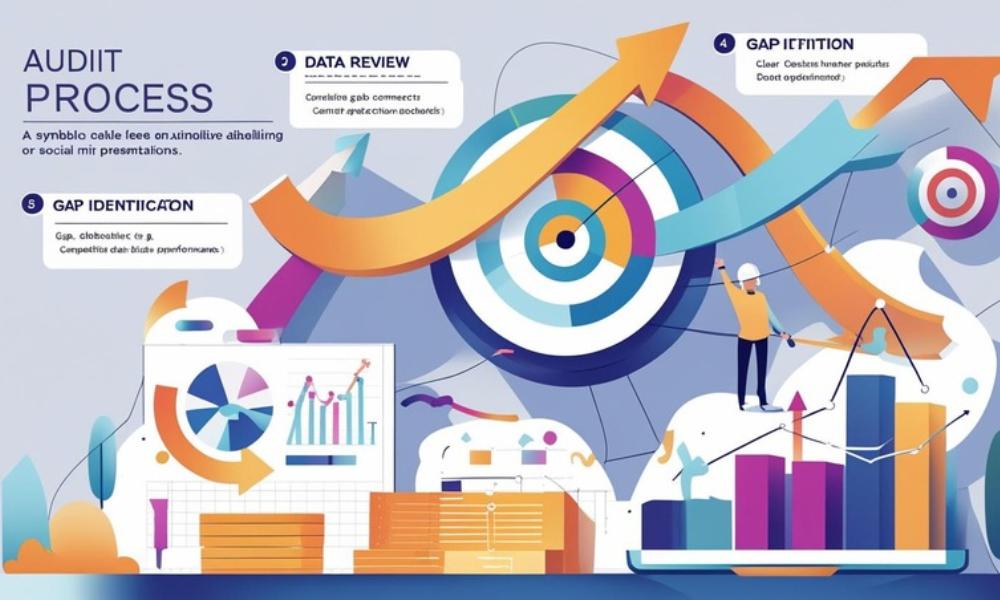
Audits don’t need to be complicated. Here’s how I typically run them with clients:
Step 1: Set Clear Objectives
We start with business goals. Want more qualified leads? Better customer retention? We define what success looks like before we open any dashboards.
Step 2: Review the Data
This includes pulling platform reports, analytics, CRM data, and performance trends. If it’s measurable, I look at it.
Step 3: Identify Gaps and Opportunities
Are your campaigns aligned with your customer journey? Are channels working together—or at odds? This is where we connect the dots.
Step 4: Competitive Benchmarking
We compare your strategy to 2–3 direct competitors—not to copy them, but to find where you can outperform them.
Step 5: Deliver Actionable Next Steps
This isn’t a 30-page deck with vague ideas. You get a prioritized list of what to fix, what to drop, and where to focus for better results.
More on that here.
“But Our Marketing Is Already Working…”
Awesome. But how do you know it’s working as well as it could?
Even top-performing brands have underutilized assets, duplicated spend, or disconnected funnel stages. An audit helps you optimize what’s already strong—and strengthen what’s not.
Need proof? Take a look at how audits improved ROI and positioning for clients in this breakdown.
Audits vs. Consultations: What’s the Difference?
People often confuse the two. Here’s how I explain it:
- A marketing audit tells you what’s going on.
- A consultation helps you decide what to do about it.
Think of an audit as the diagnosis and the consultation as the strategy. I go deeper into that here.
What Happens If You Skip Audits?
Short answer: You waste time and money without realizing it. Longer answer:
- You keep funding strategies that don’t perform
- Your messaging drifts from what your audience actually needs
- Teams work harder, not smarter
- You lose visibility into what’s really driving (or blocking) growth
And eventually, someone asks, “Why aren’t we seeing results?”—and no one has a good answer.
Avoid that mess. If you’re still not sure how audits play out in real life, these client case studies bring it home.
Final Thoughts
Marketing audits aren’t just for businesses in crisis. They’re for businesses that care about clarity, efficiency, and sustainable growth.
Whether you’re launching a new strategy or fine-tuning what’s already working, a solid audit helps you make better decisions faster.
If your marketing feels cluttered, inconsistent, or just “off,” it’s probably time for a review. And if you’re not sure where to start? That’s what I’m here for.