

You can optimize every meta tag, perfectly format every H1, and hit your keyword density like a pro—but if your content isn’t high quality, it won’t rank for long.
Content quality is what keeps your pages alive in search results. It’s what turns visitors into readers, and readers into leads.
And in 2025, with search engines prioritizing relevance and intent, content quality is no longer a nice-to-have—it’s the core of successful on-page SEO.
In this post, I’ll break down how I define content quality, how it connects to rankings, and what I do to make sure every piece I publish actually delivers.
What You’ll Learn:
- What “quality content” means in the context of on-page SEO
- How content quality affects rankings, engagement, and conversions
- Simple methods I use to improve content without overhauling everything
- A checklist to audit and improve your own content quality
Want the full picture of on-page SEO? Start with this beginner’s guide, then come back here for the content-focused details.
What Does “Quality Content” Really Mean?
Let’s clear something up: content quality isn’t about word count.
You don’t need 3,000 words to rank. You need content that:
- Meets search intent
- Is accurate, helpful, and easy to read
- Is structured in a way that makes sense to both people and search engines
To me, a quality blog post or landing page:
- Solves a specific problem
- Delivers on its promise
- Keeps the reader engaged until the end
And yes, it includes smart SEO, but it’s not written just for algorithms.
Why Content Quality Is Crucial for On-Page SEO

Search engines have gotten better at understanding real value.
If your content isn’t helpful or trustworthy, Google notices. And users bounce.
Here’s how I see content quality contributing to rankings:
1. Improved Dwell Time and Lower Bounce Rate
When your content is engaging and well-written, people stick around. That sends a positive signal to search engines.
2. Better Topical Relevance
Well-written content naturally includes variations, synonyms, and supporting terms. This helps Google understand the full context of your page.
3. E-A-T Signals
Content that shows Expertise, Authoritativeness, and Trustworthiness is more likely to rank—especially in competitive spaces.
I explain this in more depth in my on-page content optimization guide.
How I Improve Content Quality Without Starting From Scratch
Sometimes, your content doesn’t need a rewrite—it just needs a tune-up.
Here’s what I usually focus on:
1. Tighten the Introduction
The first 100 words should clearly tell the reader:
- What this page is about
- What they’ll learn or get
- Why they should keep reading
I cut fluff, remove vague promises, and get to the point. Fast.
2. Align Every Section With Search Intent
Each section of the content should serve the main purpose of the query.
If someone searches “how to write meta descriptions,” they’re not looking for SEO theory—they want examples, steps, and templates.
Tip: Skim your H2s. If they don’t walk the reader through a logical process, something’s missing.
3. Add Internal and External Value
I sprinkle in internal links to related pages when it helps the reader dive deeper—like this one on keyword placement best practices.
I also add external links to trusted sources when citing stats or definitions. That builds authority and credibility.
4. Improve Formatting for Readability
If your content looks like an essay from 2003, people won’t read it.
I:
- Break up paragraphs (2–4 lines max)
- Add bullets, bolded lines, and visual structure
- Use descriptive headings every few scrolls
- Include images or visual cues where relevant
Structure supports quality.
5. Use Clear, Concise Language
I avoid jargon unless I know the audience understands it.
Even then, I define terms the first time they show up.
Write simply. Make your point. Don’t ramble.
6. Keep the Content Focused
One page = one purpose.
If I find tangents or unrelated subtopics, I either cut them or turn them into separate blog posts that I can link to later.
It helps with clarity—and with future content planning.
Common Content Quality Mistakes (That Hurt Rankings)
Here are some of the biggest problems I fix during audits:
Thin Content
Pages under 300 words that barely scratch the surface. Google wants depth, not filler.
Overwritten Content
Pages that ramble to hit a word count. I’d rather say it well in 900 words than bloat it to 2,500 for no reason.
Outdated or Inaccurate Info
Outdated stats, broken links, or tech references from 2018. These lower trust instantly.
No Visual Breaks
Walls of text with no headings, bullets, or formatting. These posts might be full of value—but no one will read far enough to see it.
Content Quality Checklist (Before I Hit Publish)
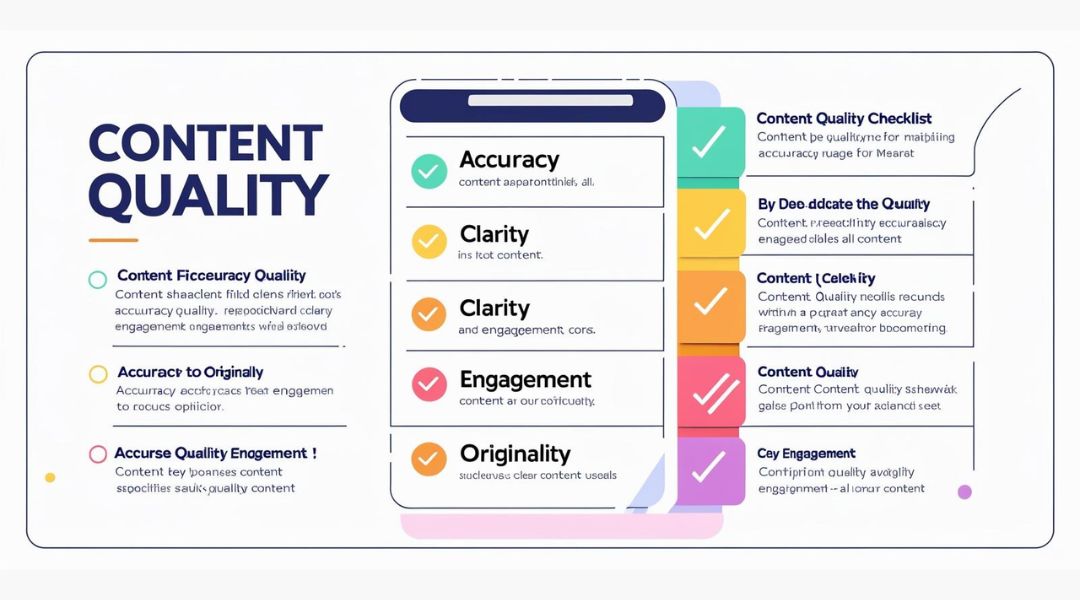
Here’s what I review on every post or page:
- Does the content meet search intent?
- Is the introduction clear and specific?
- Are all headings useful and easy to skim?
- Is the language clear, simple, and human?
- Are there helpful internal and external links?
- Does it flow logically from start to finish?
- Have I removed outdated or unnecessary content?
- Is it visually easy to read?
If the answer isn’t “yes” across the board, I keep editing.
Final Thoughts
Quality content isn’t about length. It’s about purpose.
It’s about understanding the searcher’s question—and giving them the best possible answer, clearly and confidently.
On-page SEO works best when the foundation (your content) is solid. And content quality is the foundation that makes every other optimization step worth it.
If your content isn’t ranking—even with good technical SEO—chances are, it’s not fully aligned with what your audience (or Google) is looking for.
Want help reviewing your blog or landing pages for content quality? That’s part of what I do in every on-page optimization plan.